Basics
What is a colostomy?
A clear, evidence-based explanation of what a colostomy is, the different types, why surgeons create one, and what to expect during recovery and daily life.
On this page
- What does a colostomy actually look like?
- Why might someone need a colostomy?
- What are the different types of colostomy?
- Sigmoid colostomy
- Descending colostomy
- Transverse colostomy
- Ascending colostomy
- Loop vs end colostomy
- What happens during colostomy surgery?
- What does recovery look like?
- In the hospital
- The first six weeks at home
- Longer-term recovery
- Living with a colostomy: the daily routine
- Emptying the pouch
- Changing the pouch
- Diet
- Clothing
- Sleep
- Showering, swimming, and bathing
- Sex and intimacy
- Work, travel, and sport
- What complications should I be aware of?
- When to seek medical help
- Reversal: is the colostomy permanent?
- Support and community
- The bottom line
A colostomy is a surgical opening (stoma) that brings part of the large intestine (colon) through the abdominal wall to the skin, so stool leaves the body into a discreet, sealed pouch instead of through the rectum and anus. It can be temporary (later reversed) or permanent, depending on the underlying condition. The stoma has no nerve endings, so it is not painful to touch.
Colostomies are one of the most common life-saving and life-changing operations in modern surgery. Around 100,000 colostomies are performed each year in the United States alone, and most people with one return to work, exercise, travel, and intimate relationships within a few months of recovery.
This guide explains, in plain language, what a colostomy is, why it might be created, the different types, what life looks like afterwards, and where to find trustworthy support.
What does a colostomy actually look like?
A stoma is a small, round or oval piece of bowel tissue, typically 2–4 cm across, that sits just above the skin like a soft pink or red button. It looks similar to the inside of your cheek — moist, warm, and well supplied with blood. It has no nerve endings, so touching or cleaning the stoma is not painful.
The stoma has no muscle to control when stool comes out, so a flat adhesive pouch is worn over it. The pouch sits flush against the abdomen, is odour-proof when sealed, and is emptied into a toilet several times a day. Modern pouches are quiet, slim, and invisible under most clothing.
Why might someone need a colostomy?
A colostomy is created when the lower bowel, rectum, or anus cannot safely do its normal job — either because of disease, injury, or a planned step in a larger operation. The most common reasons include:
- Colorectal cancer, when the diseased section of bowel is removed
- Diverticulitis with perforation or severe infection
- Inflammatory bowel disease (Crohn’s disease, ulcerative colitis), although ileostomies are more common here
- Bowel obstruction that cannot be relieved any other way
- Severe trauma or gunshot/stab injury to the abdomen
- Faecal incontinence that has not responded to other treatment
- Birth defects such as imperforate anus or Hirschsprung’s disease (in children)
- Radiation damage to the rectum after pelvic cancer treatment
- A planned protective step after lower bowel surgery, to let a new join (anastomosis) heal without stool passing over it
Whether a colostomy is temporary (later reversed) or permanent depends entirely on the underlying condition and what the surgical team can preserve.
What are the different types of colostomy?
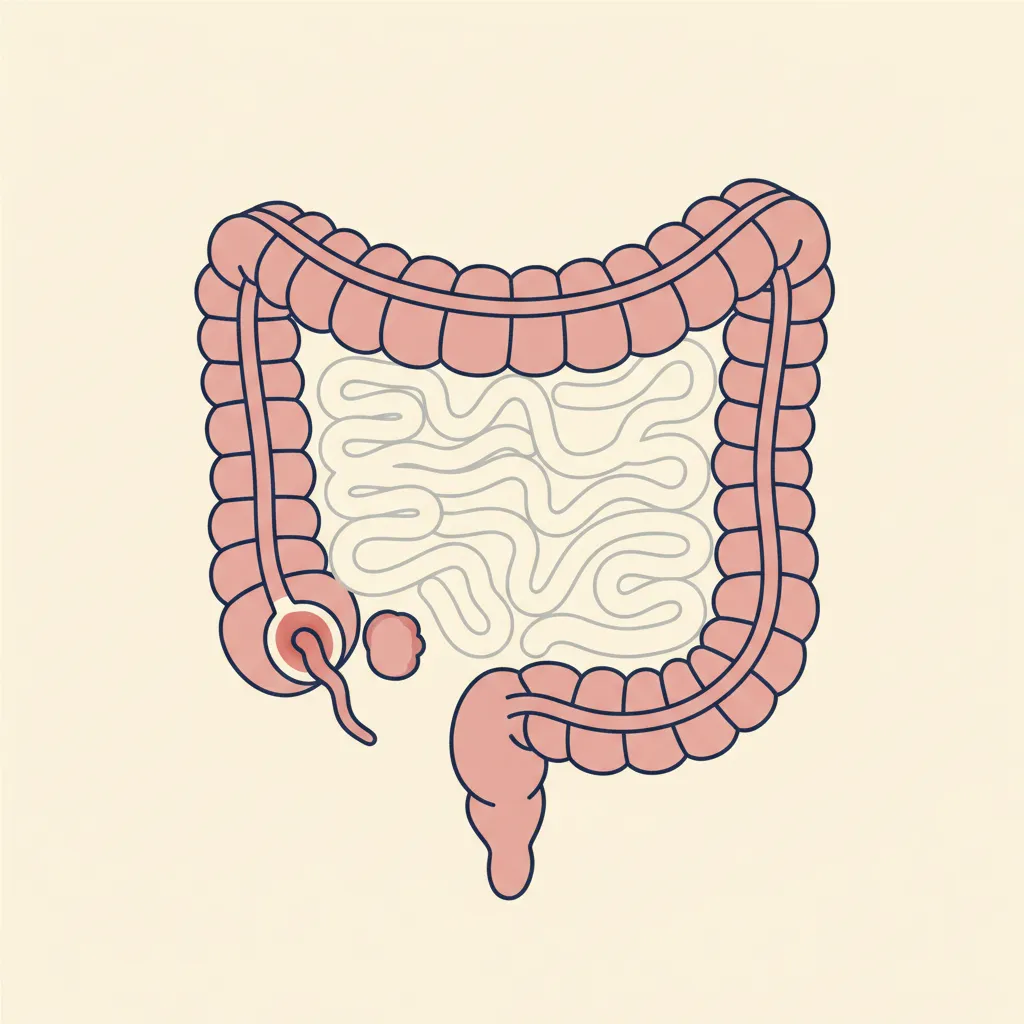
Colostomies are named after the part of the colon they come from. The location matters because it affects how thick the stool is, how often the pouch needs emptying, and which complications are more or less likely.
Sigmoid colostomy
The most common type. The stoma is formed from the sigmoid colon — the S-shaped section of bowel just above the rectum — and usually sits on the lower-left side of the abdomen. Because the stool has travelled almost the full length of the colon, output is typically formed and predictable, and the pouch usually only needs emptying one to three times a day.
Descending colostomy
Created from the descending colon, slightly higher than a sigmoid colostomy and also on the left side of the abdomen. Output is similar to a sigmoid colostomy — semi-formed to formed.
Transverse colostomy
Formed from the transverse colon that runs across the upper abdomen. The stoma usually sits in the upper-right or upper-middle abdomen. Output is softer and more frequent than from a sigmoid colostomy because less water has been reabsorbed. Transverse colostomies are most often temporary — for example, to protect a lower bowel join after surgery.
Ascending colostomy
The rarest type. The stoma comes from the ascending colon on the right side of the abdomen. Output is liquid to semi-liquid and frequent, similar in many ways to an ileostomy.
Loop vs end colostomy
A second classification describes how the bowel is brought to the surface:
- An end colostomy uses the cut end of the colon and is usually permanent, although some can be reversed if the rectum is still in place.
- A loop colostomy brings a loop of bowel up to the skin and opens it, creating a stoma with two openings (the proximal one passing stool, the distal one usually only mucus). Loop colostomies are easier to reverse and are typically temporary protective stomas.
What happens during colostomy surgery?
Colostomy surgery is usually carried out under general anaesthetic and takes two to four hours, depending on what else is being done at the same time (such as removing diseased bowel).
The operation can be performed in three ways:
- Open surgery through one larger abdominal incision
- Laparoscopic (keyhole) surgery through several small incisions and a camera
- Robotic-assisted surgery, a variation of laparoscopic surgery
The surgeon brings a section of healthy colon through a carefully chosen point on the abdominal wall — usually marked by a stoma care nurse before surgery so that the site is flat, visible to the patient, and away from skin creases, scars, the waistband, and the bony pelvis. Choosing a good site is one of the strongest predictors of long-term comfort and a low complication rate.
Most people stay in hospital for three to ten days after a colostomy, depending on the underlying surgery and recovery.
What does recovery look like?
The first weeks after colostomy surgery focus on three things: healing the abdominal wound, getting the bowel working again, and learning the pouching routine.
In the hospital
- A stoma care nurse (sometimes called a WOC nurse — wound, ostomy and continence nurse) usually visits within the first 24 hours.
- The first stoma output is often gas, then thin liquid, then gradually thicker stool as the bowel “wakes up” — a process called return of bowel function.
- You will be taught how to empty and change the pouch, and how to inspect the stoma and surrounding skin.
- Most hospitals provide a starter supply of pouches and a written discharge plan.
The first six weeks at home
- Avoid heavy lifting (anything over about 4–5 kg) so that the abdominal muscles can heal and reduce the risk of a parastomal hernia.
- Walk daily — short, gentle walks help bowel function recover and prevent blood clots.
- Eat smaller, more frequent meals at first; chew thoroughly; stay well-hydrated.
- Watch for warning signs (see “When to seek medical help” below).
- Expect emotional ups and downs — they are normal and usually improve as confidence grows.
Longer-term recovery
Most people are physically recovered enough to return to office-based work within 4–8 weeks and to heavier physical work within 8–12 weeks. Exercise, sex, travel, and swimming are all possible with a colostomy, and most people find a comfortable rhythm within three to six months.
Living with a colostomy: the daily routine
The day-to-day routine is simpler than most people expect before surgery.
Emptying the pouch
A drainable pouch is emptied into the toilet whenever it is roughly one-third to one-half full — typically 2 to 6 times a day with a sigmoid colostomy. Closed-end pouches are not emptied; they are removed and replaced.
Changing the pouch
The full pouching system (or just the pouch in a two-piece setup) is changed on a regular schedule — usually every 1 to 4 days. The skin around the stoma is cleaned with warm water, dried, and a fresh barrier is applied. Most people develop a routine that takes 5–10 minutes.
Diet
There is no single “ostomy diet”. Most people return to eating most foods within a few months. Practical tips include:
- Eat slowly and chew well to reduce gas and the risk of food blockage.
- Drink 1.5 to 2 litres of fluid a day, more in hot weather or with diarrhoea.
- Introduce new foods one at a time so you can identify personal triggers.
- Foods that commonly increase gas: beans, cabbage, broccoli, onions, fizzy drinks.
- Foods that commonly increase odour: eggs, fish, garlic, asparagus.
- Foods that commonly thicken output: bananas, white rice, pasta, smooth peanut butter, applesauce.
Clothing
No special clothing is needed. Most pouches are designed to sit flat under regular waistbands. Many people choose high-waisted underwear, support belts or wraps for extra security during exercise, intimacy, or active days — but these are personal preferences, not medical requirements.
Sleep
Empty the pouch before bed. Most people sleep in their usual position. Some prefer to wear a discreet support belt overnight for peace of mind.
Showering, swimming, and bathing
A colostomy pouch is fully waterproof and can be worn in the shower, bath, swimming pool, sea, or hot tub. Some people prefer to shower with the pouch off — this is also safe; water will not enter the stoma.
Sex and intimacy
A colostomy does not prevent a normal, satisfying sex life. Confidence often takes time to rebuild; pouch covers, intimacy wraps, and open communication with a partner help. Specialist counselling is widely available through stoma care nurses and ostomy associations.
Work, travel, and sport
People with colostomies work in every field — from office work to construction, nursing to the military. Air travel is straightforward; carry spare supplies in hand luggage and consider an ostomy travel certificate for security checks (most national ostomy associations publish a template). Most sports — including swimming, cycling, yoga, weightlifting, and many contact sports — can be resumed with appropriate support garments and medical guidance.
What complications should I be aware of?
Most people live with a colostomy for years without serious problems, but some complications are common enough to recognise early:
- Skin irritation around the stoma — usually from a pouch that doesn’t fit well or leaks. A stoma care nurse can re-measure the stoma and recommend convex barriers or skin-protective products.
- Parastomal hernia — a bulge around the stoma caused by abdominal contents pushing through the muscle weakness. More common after the first year. Often managed with support belts; occasionally needs surgical repair.
- Prolapse — the stoma becomes longer than usual. Often manageable conservatively; rarely needs surgery unless circulation is compromised.
- Retraction — the stoma sinks below the skin line, making pouching harder. Convex products often solve this.
- Stenosis (narrowing) — the stoma opening narrows over time. Reported to the surgical team early.
- Leakage — usually a sign the pouching system needs adjusting; should not be considered normal.
- Dehydration — more common with transverse and ascending colostomies; managed by drinking enough fluid and using oral rehydration solutions when output is loose.
When to seek medical help
Contact your stoma care nurse, GP, or surgical team if you notice any of the following:
- The stoma changes colour to dark purple, brown, or black rather than its usual pink-red
- No stool or gas output for more than 12 hours, especially with abdominal pain, nausea, or vomiting (possible bowel blockage)
- Severe, watery output that doesn’t settle within 24 hours (risk of dehydration)
- Bleeding from inside the stoma (not minor surface bleeding from rubbing)
- Significant swelling, redness, or pain around the stoma
- A new bulge around the stoma site that doesn’t go down when you lie flat
- Fever, chills, or feeling generally unwell
When in doubt, call. Stoma care teams would rather hear from you early than late.
Reversal: is the colostomy permanent?
A temporary colostomy is created to give the bowel below it time to heal — for example, after surgery to remove a section of cancer with a new join, or after a perforation has been repaired. Reversal is typically considered 3 to 12 months after the original surgery, once imaging confirms the lower bowel has healed.
Reversal is a separate operation, usually shorter and less complex than the original. Most people are in hospital for 2 to 5 days. After reversal, stool returns to passing through the rectum and anus. Bowel habits often take 3 to 12 months to fully settle, and many people experience a period of urgency, frequency, or some leakage, known as low anterior resection syndrome when the original surgery removed part of the rectum.
A permanent colostomy is created when reversal isn’t possible — most commonly because the rectum or anus has been removed (an operation called abdominoperineal resection, often for low rectal cancer). For permanent colostomies, the focus is on long-term quality of life, which is very good for the large majority of people.
Support and community
Adjusting to a colostomy is as much an emotional journey as a physical one, and you do not have to do it alone. Trusted resources are widely available and usually free of charge:
- Stoma care nurses at your hospital or community clinic — your most useful long-term resource
- National ostomy associations in your country — most run helplines, peer-support visitor programmes, and local meet-ups
- Online peer communities for day-to-day questions, shared experiences, and lifestyle tips
- Specialist counselling through hospital teams or community mental-health services if emotional adjustment is harder than expected
Talking to someone who has lived well with a colostomy for years — and is thriving — is one of the most effective steps for any newly diagnosed person.
The bottom line
A colostomy is a permanent or temporary surgical opening of the colon to the abdominal wall, created to manage a wide range of bowel diseases, injuries, and complications. With modern pouching systems, expert nursing support, and good information, the great majority of people with a colostomy live full, active, confident lives — at work, in relationships, in sport, and in travel.
If you or someone you love is preparing for a colostomy, the most useful next steps are:
- Meet a stoma care nurse before surgery for stoma site marking — it makes a measurable, lifelong difference.
- Read one or two trusted overviews like this one — and put down anything that scares you without citing reputable sources.
- Connect with a peer-support visitor through your national ostomy association — hearing from someone who has been through it is uniquely reassuring.
- Ask questions. There is no question too small, and a good stoma team welcomes every one.
Common questions
Frequently asked questions
- Is a colostomy permanent?
- It can be either. A colostomy is temporary when the bowel below it needs time to heal — surgeons can usually reverse it later in a separate operation. It is permanent when the lower bowel or rectum has been removed or cannot be safely reconnected. Your surgical team will tell you which applies to you and roughly when reversal, if planned, would happen.
- Can you still poop after a colostomy?
- Yes, but the route changes. After a colostomy, stool leaves the body through the stoma into a pouch rather than through the rectum and anus, so you no longer pass stool the usual way. The stoma has no muscle to control timing, so output collects in the pouch and is emptied into the toilet. If a temporary colostomy is later reversed, normal bowel movements through the rectum usually return, though habits can take several months to settle.
- Why would someone need a colostomy?
- A colostomy is created when the lower bowel, rectum, or anus cannot safely do its job. Common reasons include colorectal cancer, diverticulitis with perforation, inflammatory bowel disease, bowel obstruction, severe abdominal trauma, faecal incontinence that hasn't responded to treatment, and certain birth defects in children. It may also be a planned protective step that lets a new surgical join heal without stool passing over it. Whether it is temporary or permanent depends on the underlying condition.
- Does a colostomy bag smell?
- When sealed and intact, a modern colostomy pouch is odour-proof, so there is no smell during normal wear. Odour is only noticeable briefly when the pouch is opened to empty it. Filters that neutralise gas, pouch deodorant drops, and good hygiene during changes keep odour controlled. A persistent smell usually signals a leak or a poorly fitting pouch and should be checked with a stoma care nurse.
- Does a colostomy hurt?
- The stoma itself has no nerve endings, so touching it does not hurt. After surgery, the abdominal incision is sore for a few weeks while it heals. Pain around the stoma in the long term is not normal and should be reported to a stoma care nurse — it usually points to skin irritation, a poorly fitting pouch, or a complication like a hernia.
- Will I still be able to eat normally?
- Most people return to a near-normal diet within a few weeks. In the first 6–8 weeks, surgeons usually recommend a lower-fibre diet while the bowel settles, then a gradual reintroduction of foods. Some foods may cause more gas, odour, or looser output for a few days — keeping a simple food diary helps identify personal triggers.
- Will other people be able to see my colostomy?
- Modern pouching systems are flat, quiet, and designed to sit close to the body. With regular clothing they are invisible, including under fitted shirts, dresses, and swimwear. Specialised wraps, high-waisted underwear, and support belts can add extra discretion and security if you want it.
- How long does it take to get used to a colostomy?
- Most people feel competent with the basic routine — emptying and changing the pouch — within 4–6 weeks. Emotional adjustment usually takes longer (3–12 months) and varies a lot from person to person. Talking to a stoma care nurse and connecting with peer-support groups speeds this up significantly.
References